
Lighting plays a significant role in setting the mood and tone of any space. One effective lighting technique to enhance the visual appeal of your interiors is wall washing.
What Is Wallwash Lighting?
Wallwashing or wallwash lighting is a technique employed in architectural lighting design to uniformly illuminate large vertical surfaces, emphasizing textures and artwork. This method is commonly used in galleries, offices, museums, and residential spaces to achieve even illumination.
Here are the key features of wall wash lighting:
- Emphasizing architectural features and artwork: Wallwash lighting help accentuate wall textures, architectural details, and artwork, drawing attention to these elements and enhancing their visual appeal.
- Creation of a spacious atmosphere: By uniformly illuminating surfaces, wallwash lighting fosters a sense of openness, making even small or narrow areas appear larger and more inviting.
- Low glare and increased visual comfort: Wallwash lighting evenly distributes light across surfaces, reducing harsh contrasts and glare, and contributing to a more comfortable visual experience.
What Is a Wallwasher?
The wallwasher is a crucial element of wall wash lighting, in our case, it is a wall wash bezel that features a half circle shield that directs light towards the wall, in a wide beam angle to ensure soft and uniform illumination.
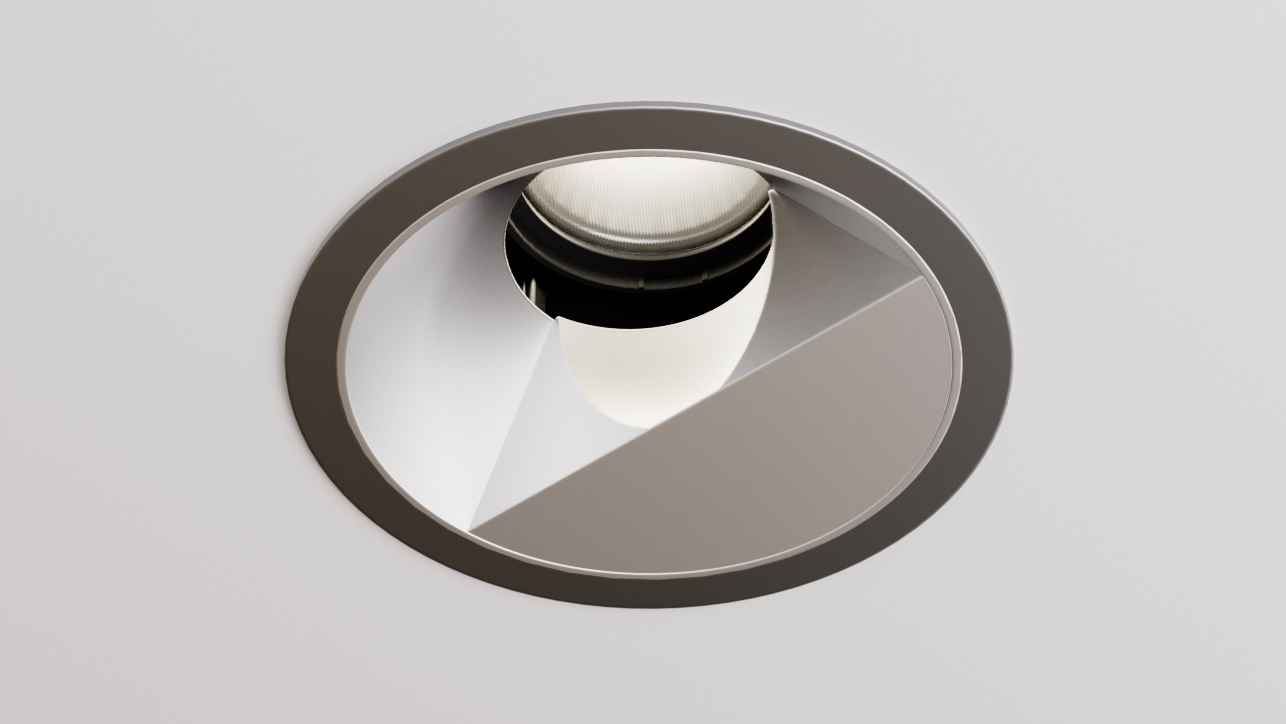
REV Flex 4 with Wallwash Bezel Configuration
Ideal Applications For Wallwash Lighting
To achieve the best results with wallwash lighting, consider the following optimal conditions and applications:
- Wall Color: Wallwash lighting is most effective on white or bright-colored walls, as these surfaces reflect more light and create a more uniform illumination.
- Recessed Lighting Distance: Ensure the lights are installed at an appropriate distance from the wall to produce a smooth and even lighting effect. Generally, the distance between the lights and the wall should be one-third of the ceiling height.
- Spacing between lights: Maintain equal spacing between each recessed light to provide consistent illumination across the surface.
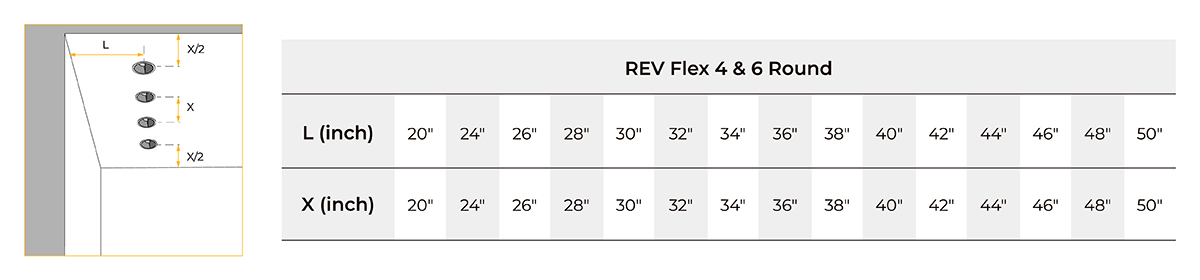
An example showing the recommended installation distance between fixtures to achieve a uniformed wallwash look with the REV Flex 4 & 6
Situations to Avoid Using Wallwash Lighting
While wallwash lighting is versatile and adaptable, there are certain situations where it may not be the most suitable choice:
- Windows Or Mirrors: Avoid directing wallwash lighting toward windows or mirrors, as the reflection of lamps and fixtures may create visual discomfort.
- Dark surfaces or heavy shadows: Dark surfaces or heavy shadows reflect less light, so if you want to achieve a wallwash effect, you may need to direct more light onto these surfaces.
Wall Washing v.s. Wall Grazing
Wall washing and wall grazing are two distinct lighting techniques, each with its unique purpose and effect. While both techniques illuminate wall surfaces, they differ in their approach and the resulting visual impact. Here is a summary of the differences between wall washing and wall grazing:
| Category | Wallwashing | Wall Grazing |
|---|---|---|
| Primary Purpose | Enhance surface smoothness | Enhance surface textures and patterns |
| Lighting Effect | Even, uniform illumination | Even, highlighted illumination |
| Shadows & Accents | Minimal shadows, smooth appearance | Minimal shadows, textured appearance |
| Fixture Placement | Away from wall | Closer to wall |
| Area of Focus | Larger areas, general illumination applications | Smaller areas, focused illumination applications |
| Best Used on | Smooth walls, bright colors | Textured walls, muted colors |
| Human Centric Lighting | Provides orientation and visual expanse in rooms | Constricted space and focused view |
| Indoor Applications | Plastered walls, murals, graphic walls | Natural stone, wood textures |
| Outdoor Applications | Facade lighting, defining open spaces | Facade textures and material highlights |
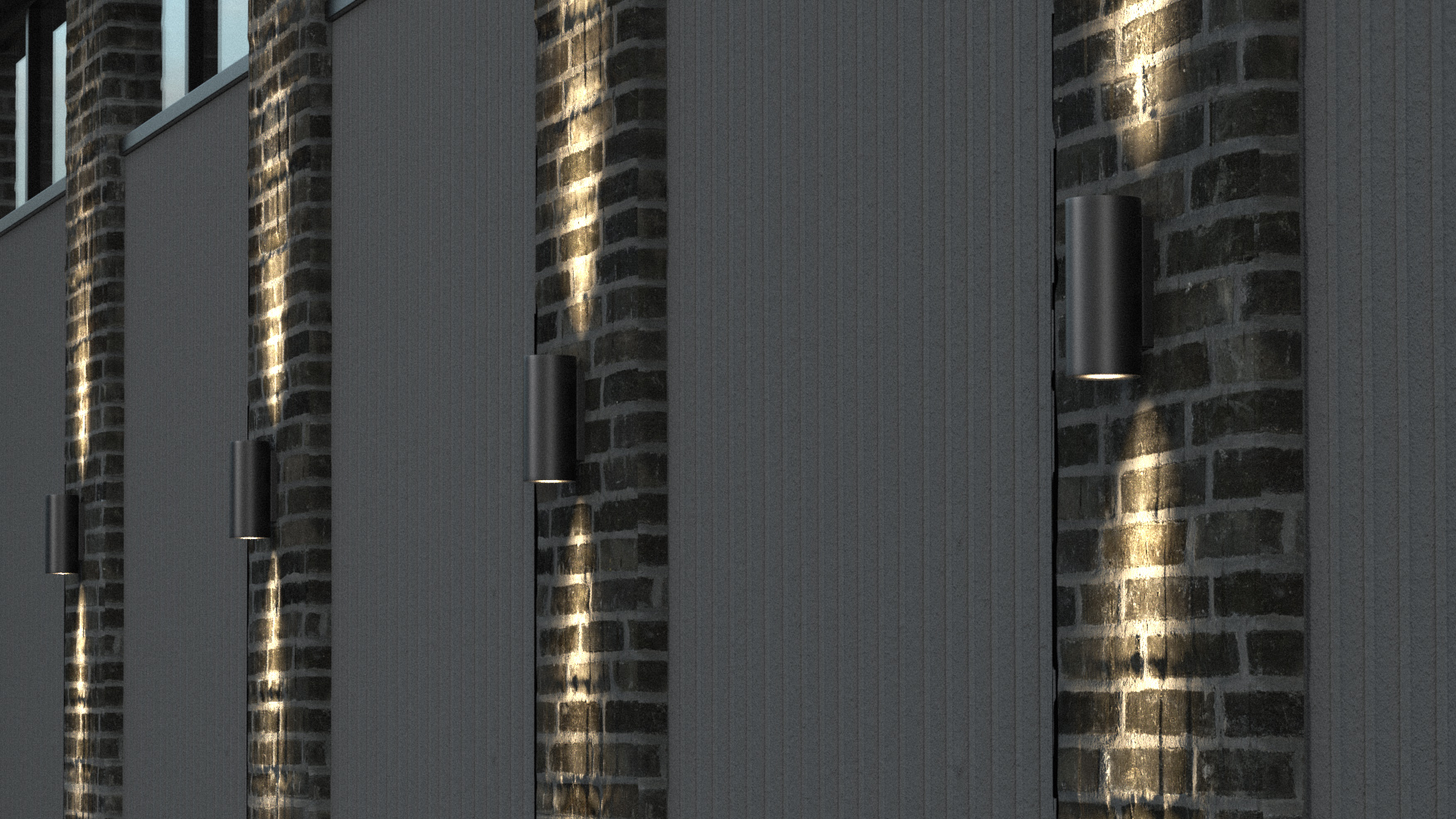
Wall grazing using Meteor’s Lance 4 outdoor wall mounted luminaire
Measuring Wallwash Lighting
When evaluating the performance and impact of Wallwash lighting, it’s important to consider these essential metrics that play a significant role in creating the desired atmosphere:
Here are the key features of wall wash lighting:
- Uniformity: Achieve consistent light distribution across surfaces. Aim for a minimum of 1:0.5 uniformity
- Maximum coverage: Ensure seamless illumination without patchy spots between fixtures
- Delivered Lumens: Measure the luminaire’s output and effectiveness in various applications. Aim for a minimum of 10 average fc.
By focusing on these key metrics, you can optimize the effectiveness and aesthetics of your Wallwash lighting design.
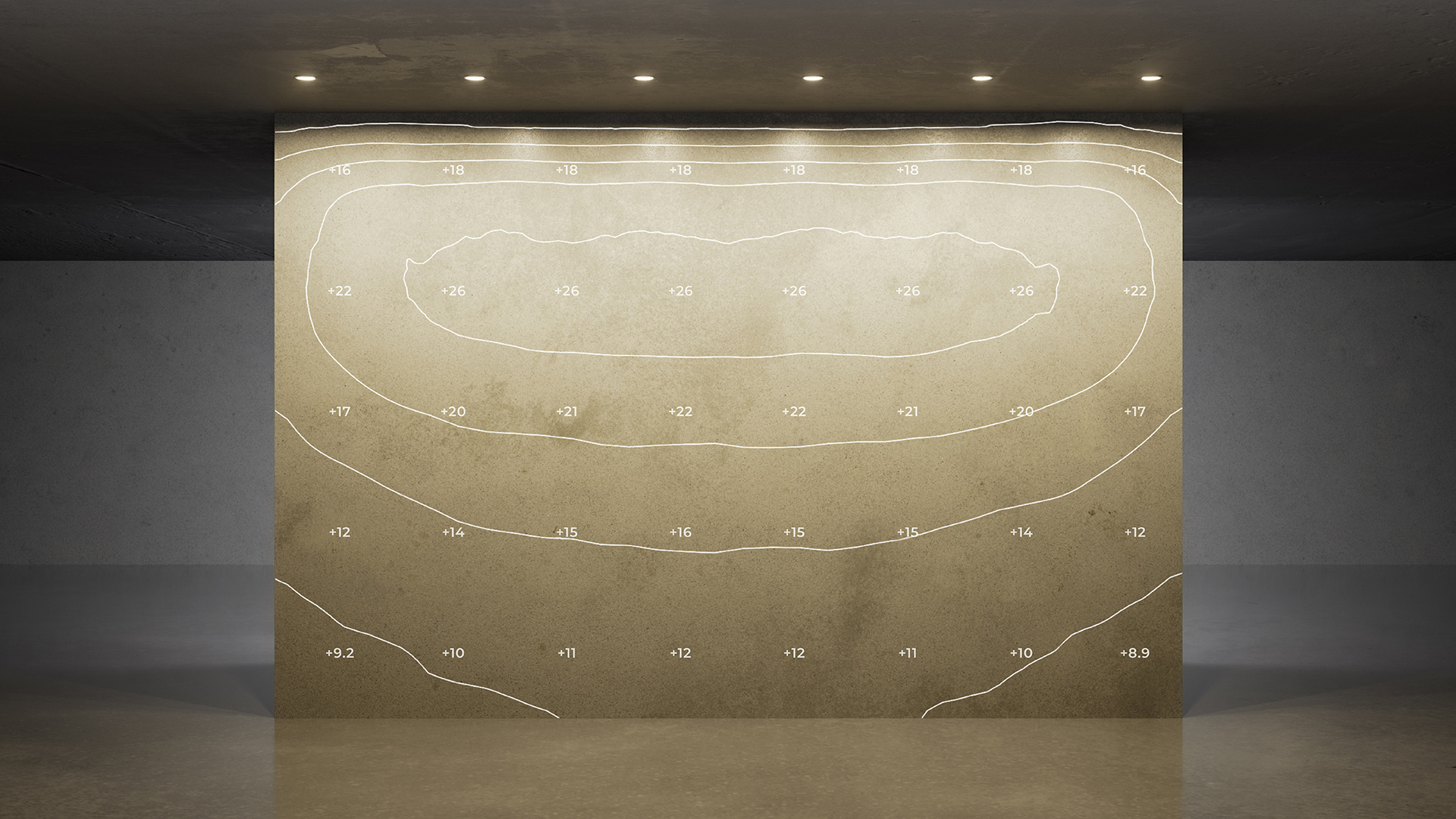
REV Flex Series With Wallwash Bezel
The REV Flex adjustable downlights are configurable with a Wallwash bezel that can help you elevate your next wall wash project. Available in a 4 and 6-inch aperture, it offers exceptional performance as demonstrated on the DIALux simulation below, where six, REV Flex 4 luminaires with Wallwash bezel offers 8,736 lm, an average 17fc, and a 0.11 min/max uniformity in a wall measuring 12 ft. by 18 ft.
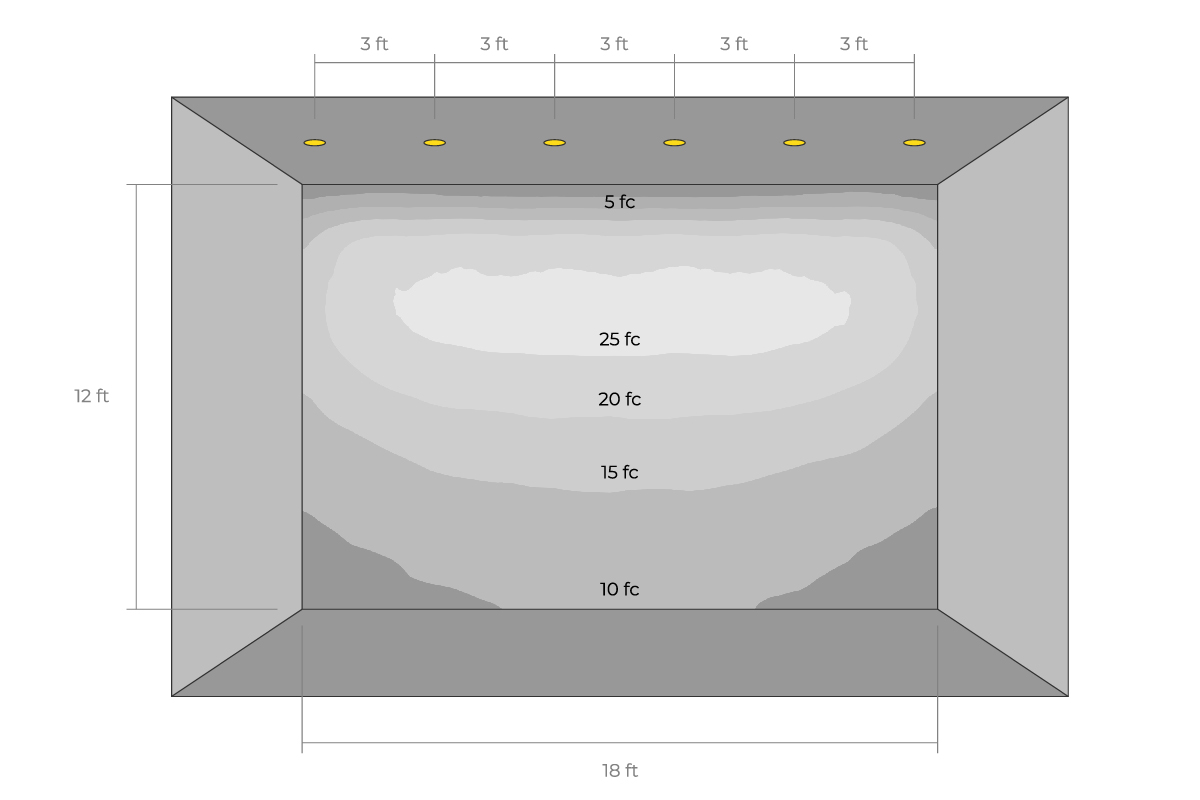
REV Flex 4
Wallwash Bezel
Total Wattage 240 W
Total Lumens 8736 lm
Average fc 17 fc
Uniformity 0.11 Min/Max
Luminaires 6
Setback 3 ft
Spacing 3 ft
Wall Size 18 ft Long, 12 ft Height